
Replacement gaskets
Replacement plate heat exchanger gaskets
Gaskets matched to your plates and selected for your media, temperature and cleaning chemicals — the most common part we supply.
Overview
What a gasket does
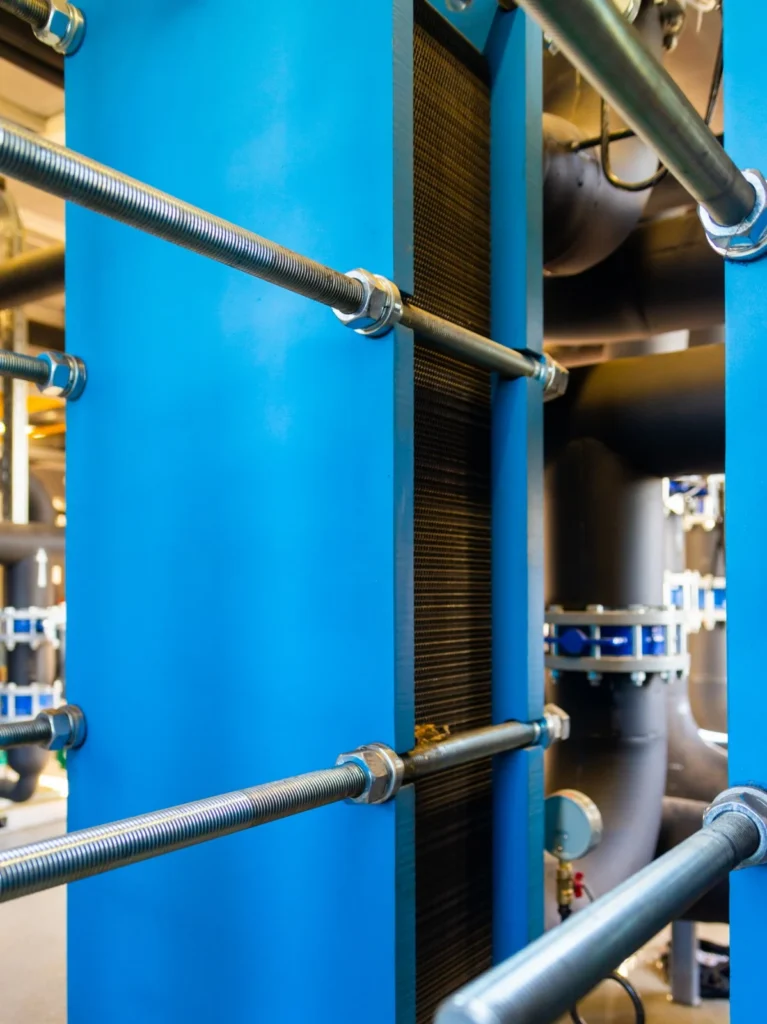
Each plate carries a gasket that seals the plate pack and directs each medium into the correct channels. When gaskets harden, flatten or crack, the pack starts to leak — first as weeping at the edges, later as a steady leak.
Replacing gaskets across the whole pack, rather than one at a time, gives an even seal and a predictable service life. Our standard supply is high-quality compatible parts that match or exceed the original OEM specification — the practical, cost-effective choice for most repairs. Genuine OEM parts are available on request.
When to replace
When new gaskets are needed
Leaking plate packs
Weeping or leaks at the edge of the pack.
Workshop services
Complete regasketing during a strip-down.
Process changes
A new medium or cleaning chemical that needs a different compound.
Higher temperatures
Compounds rated for the actual operating temperature.
Planned shutdowns
Gasket sets ready before the unit is opened.
Recommissioning
Units returning to service after storage.
Materials & configurations
Materials and configurations
Gasket materials such as NBR, EPDM and Viton, selected for your media and operating temperature. Each compound has strengths and limits:
- NBR (nitrile) — commonly used for water, oils and many general duties
- EPDM — commonly used for hot water, steam and many chemical duties; not suited to oils
- Viton (FKM) — commonly used for higher temperatures, oils and more aggressive chemicals
- Glued and clip-on gasket designs, depending on the plate
Identification
What we need to identify the right part
- Manufacturer and model
- Serial number from the nameplate
- Number of plates in the pack
- Plate dimensions and port positions, if the nameplate is missing
- Plate and gasket material, if known
- Photos of the nameplate, the unit and a plate
- The fluids and operating temperature on each side
Compatibility
Compatibility and correct selection
A gasket must fit the plate’s groove profile and suit both media — including any cleaning chemicals — at the actual operating temperature. The wrong compound can swell, harden or break down quickly.
Tell us the media and conditions and we’ll recommend a compound. If you’re not sure what’s currently fitted, a photo of the gasket and plate helps.
FAQ
Common questions
Which gasket material do I need?
It depends on the fluids, temperature and cleaning regime. Tell us the media and conditions and we’ll recommend one.
How often should gaskets be replaced?
It depends on temperature, media, cleaning chemicals and how often the pack is opened. We’ll assess them during a service.
Can you fit the gaskets for us?
Yes — gaskets can be fitted as part of a workshop service or regasketing job.
Are your gaskets OEM?
Our standard supply is high-quality compatible parts that match or exceed the original OEM specification — the practical, cost-effective choice for most repairs. Genuine OEM parts are available on request.
Related
Related services and products
Cleaning & regasketing
Remove fouling and renew gaskets so the plate pack seals and transfers heat as designed.
Replacement plates
Plates matched to your unit’s model, pattern and material.
Plate packs & kits
Complete plate packs when a full rebuild is the better option.
Get in touch
Need a quote?
Send the nameplate details or a photo and we’ll confirm what suits your unit.