
Cleaning & regasketing
Plate cleaning and regasketing
Fouled plates and tired gaskets are the two most common reasons a plate heat exchanger stops performing. We deal with both.
Overview
Two jobs that usually go together
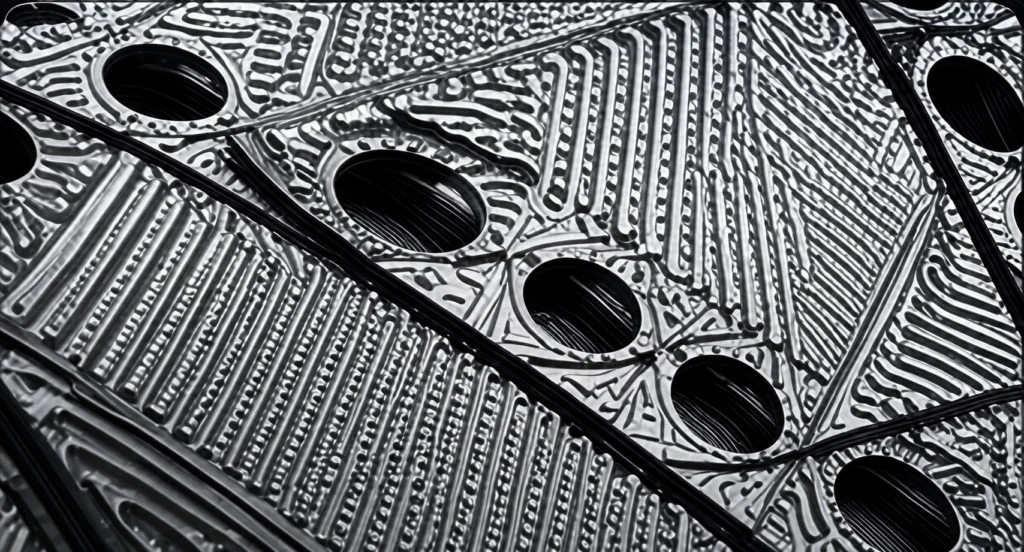
Fouling builds up on the plate surface as scale, sludge, biological growth or product residue. Even a thin layer insulates the plate and restricts the narrow flow channels, so heat transfer falls and pressure drop rises.
Gaskets do two jobs: they seal the pack and they direct each medium into the right channels. Over time they harden, flatten and lose their elasticity, and eventually they leak.
Because the pack has to be opened to clean it properly, it is usually the right time to check and renew the gaskets as well.
Warning signs
Signs the plates or gaskets need attention
- Falling outlet temperature or lost capacity
- Pressure drop rising across one or both sides
- Leaks at the edge of the plate pack
- Gaskets that are brittle, cracked or permanently flattened
- Tightening the pack no longer stops a leak
- A change of process fluid or cleaning chemical
What’s included
Cleaning and regasketing options
01
Workshop plate cleaning
Plates are removed and cleaned individually with an acid wash and high-pressure clean, then inspected.
02
Clean-in-place (CIP)
Where a unit can’t easily be isolated or removed, cleaning solution can be circulated through it while it stays installed. We’ll advise whether CIP suits your unit and fouling.
03
Gasket selection
Gasket materials such as NBR, EPDM and Viton are selected for your media, temperature and cleaning chemicals.
04
Regasketing
Old gaskets and adhesive residue are removed and new gaskets fitted to each plate.
05
Plate inspection
Cleaned plates are checked for cracks, pinholes and deformation before the pack goes back together.
06
Rebuild
The pack is reassembled in the correct order and compressed to specification.
Our process
Typical cleaning and regasketing job
- Review unit details and fouling type
- Open the plate pack
- Clean plates
- Inspect and crack test
- Fit new gaskets
- Rebuild, test and report
Equipment
Suitable equipment and applications
- Gasketed plate heat exchangers with glued or clip-on gaskets
- Units with scale, sludge or product fouling
- Brazed plate units — cleaned in place only, as the pack cannot be opened
Industries
Where we do this work
Outcomes
What you can expect
- Heat transfer restored as deposits are removed
- A pack that seals without over-tightening
- Gaskets matched to your media and temperature
- Early detection of damaged plates
Clean-in-place
When CIP makes sense — and when it doesn’t
CIP is useful when a unit is difficult to isolate or remove, or when regular light cleaning keeps a known fouling type under control. It avoids opening the pack and disturbing the gaskets.
It is less effective on heavy or hardened deposits, and it can’t find cracked plates or renew gaskets. If CIP no longer restores performance, a workshop clean is usually the next step. Talk to us about which approach suits your unit.
FAQ
Common questions
How often should gaskets be replaced?
It depends on temperature, media, cleaning chemicals and how often the pack is opened. We’ll assess the gaskets during a service and tell you whether they have life left.
Which gasket material do I need?
It depends on the fluids, temperature and cleaning regime. NBR, EPDM and Viton are common choices; tell us the media and conditions and we’ll recommend one.
Can you clean without opening the unit?
Sometimes. Clean-in-place can remove some fouling types without disassembly. Heavy or hardened fouling usually needs the plates cleaned individually.
Can I reuse my old gaskets?
Once a gasket has taken a permanent set it rarely seals reliably again. If the pack is opened for cleaning, new gaskets are usually the better option.
Related
Related services and parts
Replacement gaskets
NBR, EPDM and Viton gaskets selected for your media and temperature.
Workshop servicing
Full strip-down, clean, crack test, re-gasket and rebuild at our Granville workshop.
Replacement plates
Plates matched to your unit’s model, pattern and material.
Get in touch
Plates fouled or gaskets leaking?
Tell us about the unit and the problem — a nameplate photo and a short description are enough to start.