
Dairy processing
Plate heat exchangers for dairy processing
From cooling raw milk on arrival to pasteurising and heat recovery, dairy plants depend on plate heat exchangers that stay clean, sealed and on temperature.
Overview
Hot, sticky and cleaned every day
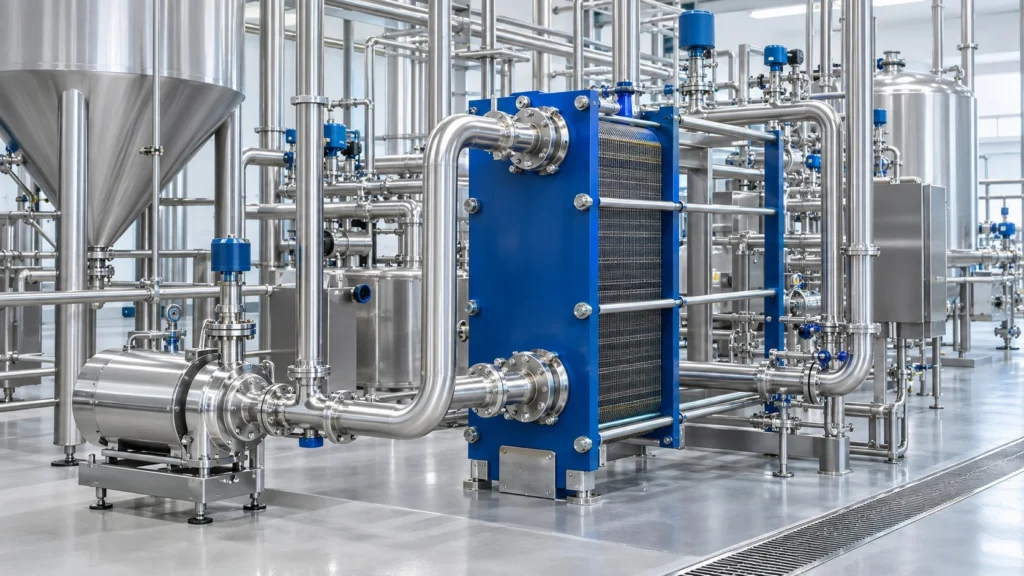
Dairy duties are demanding on a plate heat exchanger. Milk proteins and minerals foul hot plate surfaces, and the unit is cleaned with caustic and acid solutions day after day — so gaskets face both product and chemical attack.
In a pasteuriser’s regeneration section, raw and pasteurised milk pass on either side of the same plates. A pinhole or a failed gasket there is a serious hygiene risk, which is why plate inspection and crack testing matter as much as thermal performance.
Applications
Common heat-transfer applications
01
Raw milk cooling
Chilling milk on reception and before storage.
02
Pasteurising
Heating, holding and cooling sections of a pasteuriser.
03
Regeneration
Using pasteurised milk to preheat incoming raw milk.
04
Cream, whey and by-products
Heating and cooling cream, whey and other dairy streams.
05
CIP heating
Heating caustic and acid cleaning solutions.
06
Chilled and ice water
Cooling duties from the refrigeration plant.
Challenges
Operating challenges we plan for
- Protein and mineral fouling on hot plates
- Daily cleaning with caustic and acid chemicals
- Gasket compounds that must suit milk, heat and CIP chemicals
- Cross-contamination risk in regeneration sections
- Seasonal peaks in milk supply and limited shutdown windows
Services
Relevant services
- Cleaning & regasketing — removing milk stone and renewing gaskets
- Workshop servicing — strip-down, crack testing and rebuild
- Maintenance programs — servicing planned around the season
- On-site servicing — inspection and leak detection on site
Products & parts
Suitable equipment and parts
Maintenance
Maintenance considerations
Things to plan for on dairy duties:
- Crack test plates at each workshop service, especially in regeneration sections
- Match gasket compound to temperature and your CIP chemicals
- Service before the peak season rather than during it
- Watch pressure drop and outlet temperature — a steady rise often signals fouling
FAQ
Common questions
Why crack test dairy plates?
A crack or pinhole can let one stream leak into another without showing externally. Crack testing finds these defects before they become a hygiene problem.
How often should dairy units be serviced?
It depends on the product, running hours and how effective your CIP is. Many plants plan a full service in their low season; tell us your duty and we’ll suggest an interval.
Get in touch
Tell us about your application
Share the duty, the media and the operating environment, and we’ll recommend a practical option.