
Oil & gas
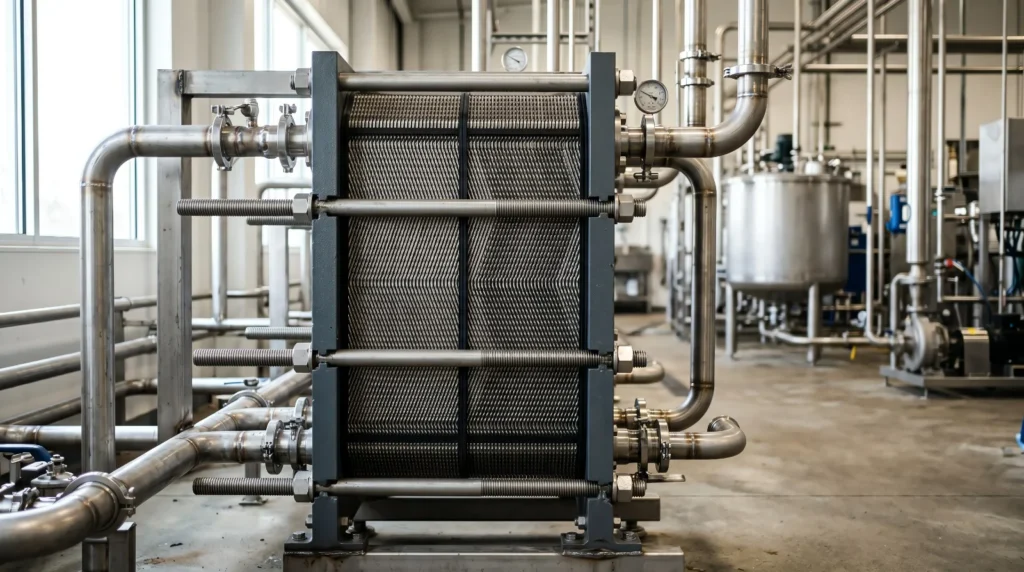
Plate heat exchangers for oil and gas
Process and utility heat transfer where higher pressures, aggressive media and strict isolation requirements shape the equipment and the maintenance.
Overview
Compact heat transfer for demanding duties
In oil and gas facilities, plate heat exchangers are used where their compact size and high efficiency suit the duty — cooling utilities, lubricating oils and process streams, often with seawater or cooling water on one side.
The media can be aggressive and the consequences of a leak significant, so plate and gasket material selection, correct compression and regular inspection are critical.
Applications
Common heat-transfer applications
01
Utility and cooling water
Closed-circuit cooling systems on production facilities.
02
Lubricating and seal oil cooling
Protecting compressors, pumps and turbines.
03
Seawater cooling
Offshore and coastal installations.
04
Process heating and cooling
Where plate heat exchangers suit the pressure and media.
05
Heat recovery
Interchanger duties between process streams.
Challenges
Operating challenges we plan for
- Aggressive or corrosive media
- Higher operating pressures
- Strict isolation, permit and safety requirements
- Offshore access and logistics
- Fouling from seawater and produced water
Services
Relevant services
- Workshop servicing — controlled strip-down, crack testing and rebuild
- On-site servicing — inspection within your permit system
- Maintenance programs — planned maintenance around production shutdowns
- Rebuilds — plate replacement and refurbishment
Products & parts
Suitable equipment and parts
Maintenance
Maintenance considerations
- Confirm gasket compound suits both the process fluid and temperature
- Crack test plates at each workshop service
- Plan parts ahead of turnaround windows
- Keep a record of each unit’s design pressure and materials
FAQ
Common questions
Do you work within site permit systems?
Yes. Isolation, permits and access remain with your team; tell us your site requirements when booking.
Get in touch
Tell us about your application
Share the duty, the media and the operating environment, and we’ll recommend a practical option.