
New heat exchangers
New plate heat exchangers, selected for your duty
Every application is different. We select and configure each new unit around your process conditions rather than offering an off-the-shelf compromise.
Overview
Sized for your duty, not off the shelf
A plate heat exchanger’s performance depends on getting the plate type, plate count, flow arrangement and materials right for the job. Too small and it won’t reach temperature; too large and you pay for capacity you don’t use.
We start with the duty — the two fluids, flow rates, inlet and outlet temperatures, allowable pressure drop and design pressure — and work through the options with your engineers.
Once installed, the same team supports the unit for its whole life with servicing, regasketing and replacement parts. Our design and consultancy discussion is obligation-free.
Options
Gasketed or brazed?
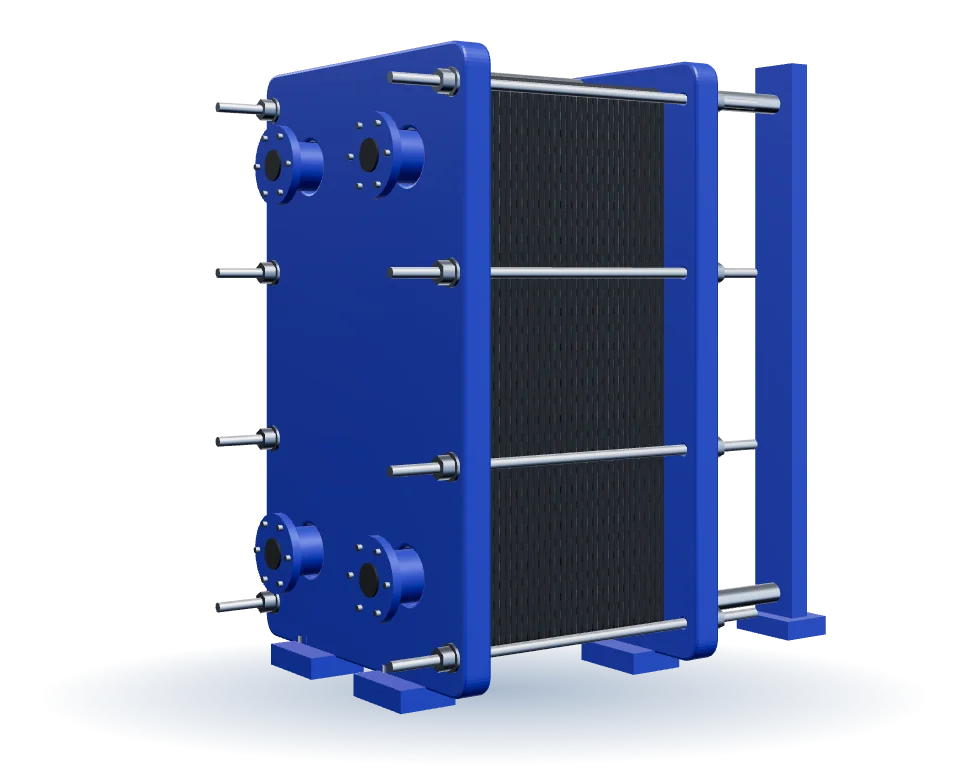
Gasketed plate heat exchangers
Openable units that can be cleaned, re-gasketed and expanded. The usual choice for fouling media and process duties.
Brazed plate heat exchangers
Compact sealed units for HVAC, heat pump and refrigeration duties with clean media.
Like-for-like replacement
Replacing a failed or obsolete unit? The nameplate is enough to start.
Materials & configurations
Materials and configurations
Plate materials including stainless steel and titanium, and gasket materials such as NBR, EPDM and Viton, are chosen to suit your media, temperature and cleaning regime.
Frame size, connection type and flow arrangement are confirmed at selection. Most gasketed units use a one-pass arrangement with all connections on the fixed frame plate, which keeps pipework simple and servicing easy.
Identification
Information we need for a selection
To size a new unit, send as much of the following as you have. If you don’t have everything, we’ll work through the rest with you.
- Both fluids and their properties
- Flow rates on each side
- Inlet and outlet temperatures
- Allowable pressure drop
- Design pressure and temperature
- Space, connection or weight constraints
- Nameplate details if replacing an existing unit
Compatibility
Why correct selection matters
An undersized unit won’t meet the duty; an oversized one can suffer low velocity and faster fouling. Material choice affects corrosion resistance and gasket life.
Getting these decisions right at the start sets the running cost and service interval for the life of the unit.
FAQ
Common questions
What information do you need to size a new heat exchanger?
Ideally the two fluids, their flow rates, inlet and outlet temperatures, allowable pressure drop and design pressure. If you don’t have everything, send what you have and we’ll work through the rest with you.
Can you replace an existing unit like-for-like?
Yes. Send us the nameplate details or a photo and we’ll review the existing unit and recommend a replacement or refurbishment option.
Should I choose gasketed or brazed?
Brazed units are compact and suit clean media; gasketed units can be opened, cleaned and expanded. The duty and the media usually decide it — we’ll recommend one.
Related
Related services and products
Workshop servicing
Full strip-down, clean, crack test, re-gasket and rebuild at our Granville workshop.
Maintenance programs
Scheduled inspections and servicing planned around your shutdowns.
Brazed plate heat exchangers
Compact sealed units for HVAC and refrigeration.
Get in touch
Have a thermal challenge?
Tell us the duty and the environment — we’ll help you select the right plate heat exchanger.