
Rebuilds
Plate heat exchanger rebuilds and refurbishment
When a unit has been in service for years, a planned rebuild can return it to its original condition for considerably less than a new exchanger.
Overview
Refurbish or replace?
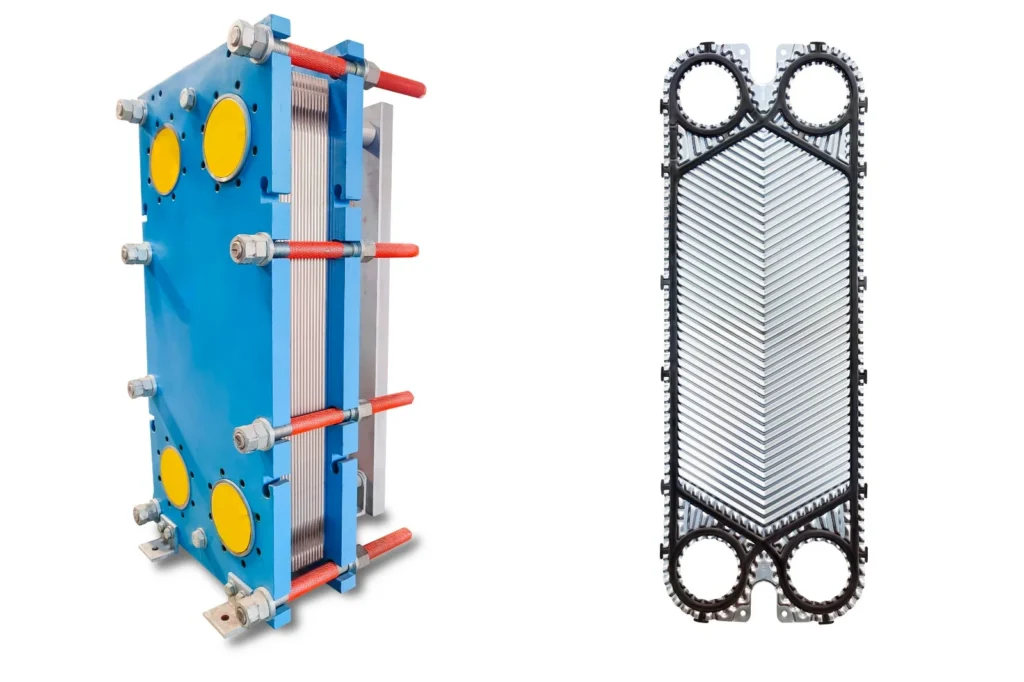
The frame of a gasketed plate heat exchanger usually outlasts its plates and gaskets many times over. When plates are damaged or worn, replacing the plate pack and renewing the gaskets can return the unit to service without new pipework, supports or approvals.
A rebuild goes further than a routine service. It can include replacing some or all of the plates, renewing every gasket, attending to the frame and hardware, and repainting covers where needed.
We’ll give you an honest view of whether refurbishment makes sense. If the frame is badly corroded, the unit is no longer suited to the duty, or parts are uneconomic, we’ll say so and discuss a replacement.
Warning signs
When a rebuild is worth considering
- Several plates are cracked, corroded or deformed
- The pack has been re-gasketed more than once and still leaks
- The unit is being returned to service after a long shutdown
- Frame paint and hardware are deteriorating
- The duty has changed and plates may need to be added or changed
- A replacement unit is expensive or has a long lead time
What’s included
What a rebuild can include
01
Full strip-down and assessment
Every plate and gasket is inspected so the rebuild scope is based on actual condition.
02
Replacement plates
Damaged plates are replaced with compatible plates matched to your model and plate pattern, or genuine OEM on request.
03
Complete plate packs
Where most plates are worn, a complete replacement plate pack can be the more economical option.
04
New gaskets throughout
Every plate is fitted with new gaskets selected for your media and temperature.
05
Frame attention
Covers repainted where needed and hardware checked.
06
Rebuild, test and report
The unit is reassembled to specification, tested and returned with a service report.
Our process
How a rebuild is planned
- Unit details and condition review
- Strip-down and assessment
- Scope and quote confirmed with you
- Parts supplied and fitted
- Rebuild & test
- Service report & return
Equipment
Suitable equipment and applications
- Gasketed plate heat exchangers where the frame is serviceable
- Units needing partial or complete plate replacement
- Units being returned to service after storage or a long shutdown
Industries
Where we do this work
Outcomes
What you can expect
- A unit returned to its original configuration
- Replacement parts matched to the model and plate pattern
- A clear recommendation on refurbish versus replace
- Documented condition for your asset records
FAQ
Common questions
Is a rebuild cheaper than a new unit?
Often, because the frame, connections and pipework are reused. We’ll compare the options once we know the unit’s condition.
Can you change the number of plates during a rebuild?
Many frames allow plates to be added or removed. We’ll check the frame and the duty before recommending it.
Do you use OEM plates?
Our standard supply is high-quality compatible plates that match or exceed the original OEM specification. Genuine OEM plates are available on request.
How long does a rebuild take?
It depends on the unit and parts availability. We’ll give you a timeframe with the quote and plan around your shutdown where possible.
Related
Related services and parts
Plate packs & kits
Complete plate packs when a full rebuild is the better option.
Replacement plates
Plates matched to your unit’s model, pattern and material.
Workshop servicing
Full strip-down, clean, crack test, re-gasket and rebuild at our Granville workshop.
Get in touch
Thinking about a rebuild?
Tell us about the unit and the problem — a nameplate photo and a short description are enough to start.