
Marine & defence
Plate heat exchangers for marine and defence applications
Seawater cooling and onboard systems where corrosion resistance, compact size and reliability are non-negotiable.
Overview
Built around seawater
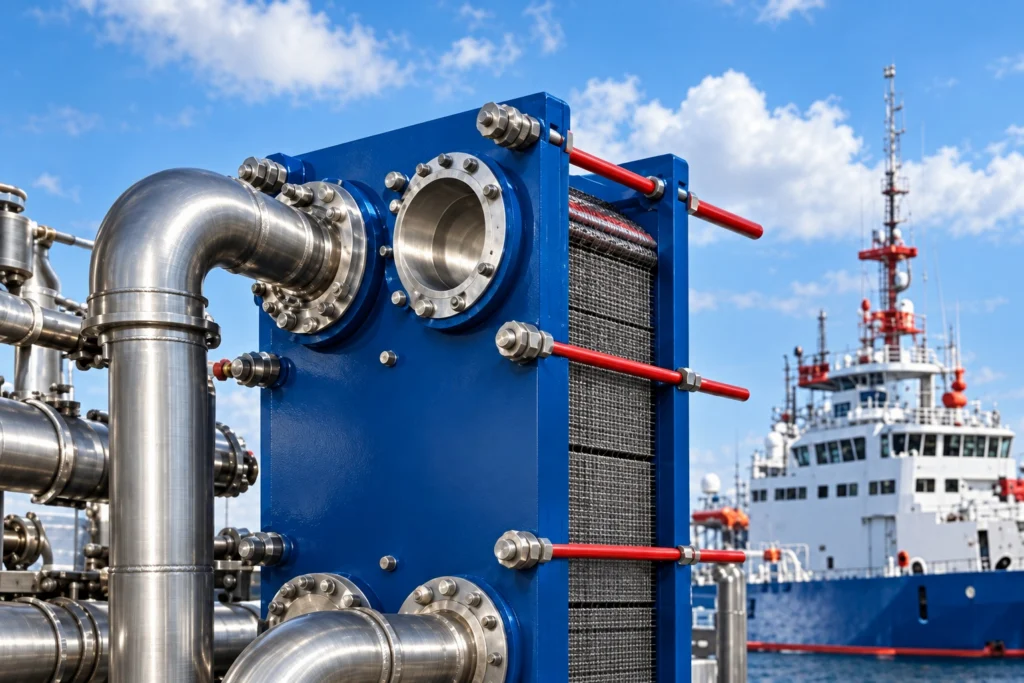
On vessels and in port facilities, plate heat exchangers commonly use seawater to cool fresh-water circuits that serve engines, generators and onboard systems. Seawater is aggressive — chlorides attack many metals and marine growth fouls the plates.
Plate material, gasket selection and cleaning intervals therefore make a big difference to service life. Titanium plates are commonly used on seawater duties for their corrosion resistance.
Applications
Common heat-transfer applications
01
Central fresh-water cooling
Seawater cooling of closed fresh-water circuits.
02
Engine and generator cooling
Jacket water and lubricating oil cooling.
03
Onboard HVAC
Chilled water and ventilation plant on vessels.
04
Port and shore facilities
Seawater-cooled plant on the waterfront.
05
Auxiliary systems
Cooling for hydraulic and other auxiliary equipment.
Challenges
Operating challenges we plan for
- Chloride corrosion from seawater
- Marine growth and silt fouling
- Limited space for access and maintenance
- Maintenance tied to docking or operational schedules
- Consequences of failure far from port
Services
Relevant services
- Workshop servicing — strip-down, cleaning and crack testing
- Cleaning & regasketing — removing marine fouling and renewing gaskets
- Rebuilds — replacing corroded plates
- On-site servicing — inspection where units can’t be removed
Products & parts
Suitable equipment and parts
Maintenance
Maintenance considerations
- Match service intervals to fouling rate, not just the calendar
- Crack test plates — corrosion can cause pinholes that let seawater into fresh-water circuits
- Hold critical gaskets and plates ahead of docking periods
- Confirm plate material when replacing plates on seawater duties
FAQ
Common questions
Why titanium for seawater?
Titanium resists chloride corrosion far better than stainless steel, which is why it is commonly used on seawater duties.
Can you work to a docking schedule?
Tell us the docking or maintenance window and we’ll plan parts and servicing around it.
Get in touch
Planning marine or defence maintenance?
Share the duty, the media and the operating environment, and we’ll recommend a practical option.